Picking a reliable supplier isn't just about flipping through product photos or comparing prices, you know? For buyers around the globe, especially when it comes to something like a Makeup Base, it's really important that the supplier keeps consistent quality, has their documentation in order, and communicates clearly. In this guide, I’ve taken a look at ten well-known suppliers from a buyer’s perspective—considering stuff like product range, formulation skills, samples, minimum order requirements, and experience with exports.
Of course, a solid evaluation isn't just about looking at the surface. You wanna check ingredient lists, safety certificates, batch records, and stability test results. Don’t forget to see how shades hold up in different lighting because what looks good in a sample jar might not perform as expected after a few months. Packaging? Totally crucial—things like pumps, tubes, or glass jars need to survive long-distance shipping without a hitch. Usually, it’s the little details that give away how professional a supplier really is.
Now, no one’s perfect. Some suppliers might have amazing formulas but offer limited customization options. Others might be super flexible with private-label options but demand larger minimum orders. I always tell folks to be wary of wishful promises—it's smarter to verify everything yourself. Ask for references, conduct factory audits, review quality control processes, and request clear production timelines to avoid unnecessary headaches. Still, docs alone aren’t enough. Seeing real samples, staying in touch often, and doing thorough pre-shipment checks are key. That’s where your judgment really comes into play.
The companies I’ve listed are meant for comparison, not as outright endorsements. Their fit depends on your target market, budget, and specific cosmetic standards in your area. And don’t forget—before placing any orders, double-check their current certifications and import rules. A good Makeup Base supplier isn’t just about attractive packaging. It’s about consistent performance, transparent dealings, and building trust for a long-term partnership.
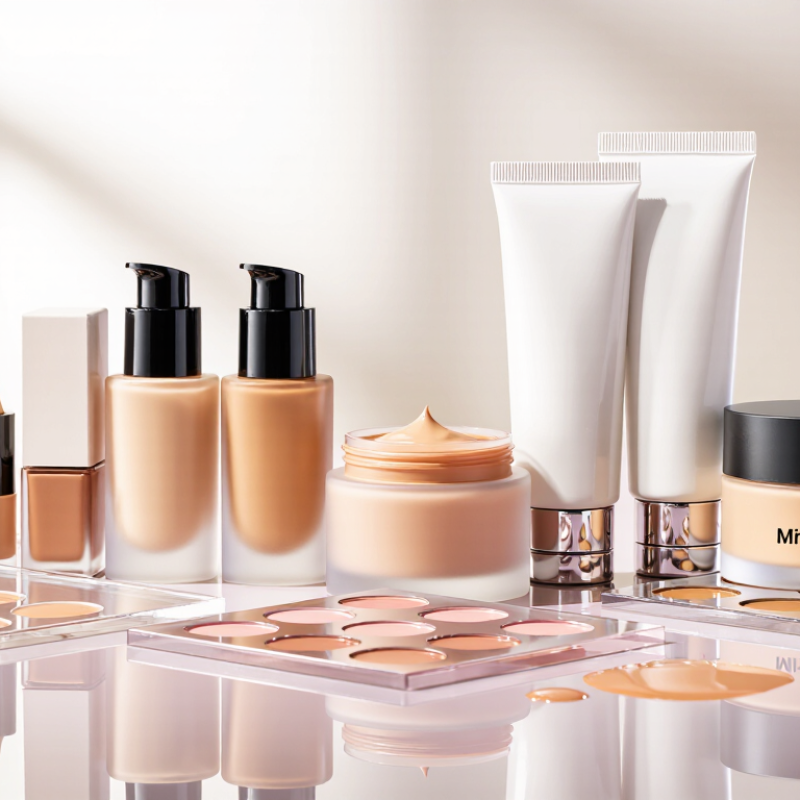
Makeup base is no longer a single foundation category. Global buyers now compare liquid foundation, cream foundation, cushion formulas, loose powder, pressed powder, primer, tinted moisturizer, and sunblock makeup base. Each format serves a different use case. Liquid products offer adjustable coverage. Powders support quick touch-ups in humid climates. Primers focus on texture and wear, while tinted formulas answer demand for lighter daily makeup.
Grand View Research reports that the global color cosmetics market could reach a 5.2% CAGR from 2024 to 2030. Facial makeup remains a major product segment within that market, supported by online distribution and demand for multifunctional formulas. The figure is useful, but not perfect. It covers broader color cosmetics, not makeup base alone. Buyers should therefore avoid treating 5.2% as a precise forecast for every base category. Regional pricing, climate, shade availability, and cosmetic regulations can change actual performance.
Tips: Ask suppliers for full ingredient lists, stability data, microbial testing, and packaging compatibility. Request samples in warm and cool conditions. Check SPF claims through recognized testing methods, especially for sunblock makeup base products. A supplier may provide attractive coverage, yet fail under sweat or flash photography. That detail matters. Data should guide sourcing, not replace physical testing.
Sources: Grand View Research, Color Cosmetics Market Report, 2024–2030; Euromonitor International, Beauty and Personal Care industry analysis.
Selecting the best makeup base suppliers requires more than comparing catalog photos. Global buyers should review MOQ, OEM capacity, GMP systems, and export volume together. A low MOQ may suit market testing, while larger orders often reduce unit costs. However, low pricing can hide weak quality controls.
Ask suppliers for recent GMP certificates, factory audit records, and batch traceability documents. For products such as Eyeshadow Base, check texture stability, pigment dispersion, filling accuracy, and packaging compatibility. An experienced supplier should explain production lead times clearly. OEM capacity also matters. Can the factory adjust shades, fragrances, containers, and labels without delaying shipment? Export volume offers useful evidence, but it is not perfect proof. Some suppliers report total trading volume instead of factory output.
Tips: Request three sample batches. Compare them after heat and cold exposure. Confirm carton dimensions, pallet plans, and customs documents before placing an order. These details prevent expensive surprises.
During screening, buyers should verify whether certificates match the legal factory name and production address. Review customer references from comparable markets, not only famous destinations. A supplier may export widely but still struggle with smaller customized orders. That difference deserves attention. I would also record every promise in the purchase agreement, because verbal assurances can disappear after payment. Some evaluations remain uncertain, and that is normal. A cautious buyer should test again before scaling.
| Rank | Anonymous Supplier Profile | Manufacturing Hub | Core Makeup Base Products | Typical MOQ | OEM / ODM Capacity | GMP and Quality Systems | Export Volume Indicator | Export Reach | Best Fit for Global Buyers |
|---|---|---|---|---|---|---|---|---|---|
| 1 | Profile A — High-Volume Color Cosmetics Plant | East Asia | Liquid foundation, cushion foundation, concealer, makeup primer | 3,000–10,000 units per shade | Full formula development, shade matching, packaging, filling, and private label production | ISO 22716-aligned GMP; batch testing and stability testing available | Large-scale production; annual capacity generally above 10 million finished units | 30+ export markets | Retail chains, mass-market launches, and multi-country programs |
| 2 | Profile B — Flexible OEM and ODM Specialist | South China | Foundation, BB cream, CC cream, concealer, tinted moisturizer | 1,000–5,000 units per SKU | Low-to-medium batch customization, custom shades, formula adjustment, and packaging sourcing | GMP production controls; microbial, heavy-metal, and compatibility testing support | Medium-to-large output; typically several million units annually | 20+ export markets | Emerging brands, online sellers, and regional distributors |
| 3 | Profile C — European Compliance-Oriented Manufacturer | European Union | Liquid foundation, primer, concealer, complexion balm | 5,000–15,000 units per formulation | Custom formulation, regulatory file preparation, packaging coordination, and scale-up support | EU Cosmetics Regulation compliance; ISO 22716 and documented quality management procedures | Medium output; commonly 1–5 million finished units annually | 25+ export markets | Premium brands requiring strong documentation and EU-market readiness |
| 4 | Profile D — Clean and Natural Makeup Base Producer | North America | Mineral foundation, serum foundation, tinted moisturizer, primer | 2,500–8,000 units per SKU | Natural ingredient selection, vegan options, custom claims review, and private label filling | Cosmetic GMP procedures; ingredient traceability and product safety documentation | Medium output; generally below 5 million units annually | 15+ export markets | Clean beauty, vegan, sensitive-skin, and specialty retail brands |
| 5 | Profile E — Cushion and Compact Base Specialist | Northeast Asia | Cushion foundation, compact foundation, concealer cushion, tone-up base | 5,000–20,000 units per design | Cushion mesh development, compact tooling, formula filling, and color customization | ISO 22716-based controls; packaging compatibility and stability testing | Large specialized output; often above 5 million compact units annually | 25+ export markets | Asian beauty brands and buyers seeking innovative compact formats |
| 6 | Profile F — Dermatology-Inspired Complexion Manufacturer | Western Europe | Sensitive-skin foundation, blemish concealer, tinted SPF base, corrective makeup | 10,000–25,000 units per SKU | Clinical testing coordination, hypoallergenic formulation options, and regulatory support | ISO 22716; documented safety assessment and controlled raw-material sourcing | Medium output; approximately 1–3 million units annually | 20+ export markets | Pharmacy channels, sensitive-skin positioning, and professional distribution |
| 7 | Profile G — Cost-Efficient High-Mix Supplier | Southeast Asia | Foundation, concealer, primer, liquid contour, color-correcting base | 2,000–8,000 units per SKU | Multi-SKU production, standard formula modification, private label packaging, and artwork support | GMP-based manufacturing; in-process quality checks and finished-product inspection | Medium-to-large output; commonly 3–8 million units annually | 15+ export markets | Value-focused brands and buyers launching multiple complexion SKUs |
| 8 | Profile H — Small-Batch Premium Formulator | United Kingdom and Ireland | Skin tint, serum base, cream foundation, illuminating primer | 500–3,000 units per SKU | Small-batch development, bespoke textures, premium packaging, and pilot production | ISO 22716-style GMP procedures; product information file support available | Small-to-medium output; generally below 1 million units annually | 10+ export markets | Indie brands, premium launches, and buyers testing new concepts |
| 9 | Profile I — Contract Filling and Packaging Partner | Southern Europe | Foundation, concealer, primer, stick foundation, cream base | 3,000–12,000 units per SKU | Contract filling, assembly, labeling, secondary packaging, and formula transfer | Cosmetic GMP controls; batch records, traceability, and release inspection | Medium output; approximately 2–5 million units annually | 20+ export markets | Buyers with an existing formula that need reliable filling and assembly |
| 10 | Profile J — Regional Export-Oriented Private Label Plant | Latin America | Liquid foundation, compact powder, concealer, primer, tinted cream | 1,000–5,000 units per SKU | Standard and semi-custom formulas, local packaging sourcing, and private label production | Local cosmetic GMP requirements; basic microbiological and stability testing support | Medium output; commonly 1–4 million units annually | 10+ export markets | Regional distributors, fast replenishment, and climate-adapted complexion products |
Suppliers 1–3 deserve close attention when scale, compliance, and consistency matter. A high-capacity factory should show clear production records, not only polished brochures. Ask about monthly output for powders, creams, and Makeup Stick formats. One supplier may produce 500,000 units monthly, while another handles smaller, flexible batches. That difference affects launch timing and inventory risk.
Certifications provide useful evidence, but they need verification. Look for current GMP or ISO 22716 documentation, recent audit reports, and traceable batch records. A reliable supplier should provide ingredient specifications, safety data, and certificates of analysis for every production lot. During a factory visit, inspect filling lines, temperature controls, and separated raw-material storage. Clean floors help, but documented procedures matter more.
Capacity alone does not prove expertise. I would compare equipment age, technical staff experience, and sample approval controls. Ask how the factory handles shade variation, broken caps, or uneven stick surfaces. These problems seem minor until thousands of units reach customers. Request stability testing under heat and humidity. Also confirm realistic lead times, minimum order quantities, and packaging capacity. Some factories promise fast delivery, then outsource critical steps. That deserves caution. My own evaluation would leave room for doubt, because certifications can expire and production quality may change after approval. A small pilot order remains wise.
Choose a laboratory with strong foundation formula development. These teams can adjust coverage, oxidation resistance, and skin feel during sampling. Ask for shade cards, viscosity data, and stability results before approving a production batch. A reliable supplier should explain pigment loading clearly, not hide behind vague claims. In my experience, formula revisions often reveal more than the first sample.
Look for flexible OEM/ODM partners supporting different textures. Liquid foundation, cushion systems, cream products, and powder bases require separate testing methods. Packaging flexibility matters too. The supplier should offer glass, plastic, refillable, and airless options. Check pump output, closure strength, and compatibility with the formula. Small details matter.
May rank higher when it offers custom color matching and low-volume pilot runs. However, attractive packaging samples can distract from weak filling accuracy or unstable formulas. Request three-month stability checks and transportation simulations. Some suppliers promise speed, but rushed approvals create expensive corrections later.
Compare formula performance and packaging together. Test samples under heat, movement, and repeated opening. Record every revision in writing. Confirm minimum order quantities, tooling fees, lead times, and quality inspections before signing.
Supplier 7 can be valuable for buyers needing unusual components, such as magnetic closures or compact refill pans. Yet customization may increase costs and production risks. Ask for packaging drawings, material specifications, and a replacement plan for defective parts. Be practical, and leave room for one more round of testing.
For global buyers, suppliers 8–10 deserve a closer look because emerging factories often balance price and flexibility. Their quotations may sit 8–15% below established producers, especially for standard foundation, primer, and cushion formulas. However, low pricing can hide extra costs for packaging changes, testing, or small production runs. Request a complete cost sheet before comparing offers.
Supplier eight shows strong quality control during sample development. The factory checks shade consistency under daylight and neutral lighting, then records viscosity and filling weight. Its typical lead time is 30–45 days after approval.
Supplier nine offers faster production, usually within 25–35 days, but its documentation needs closer review. Buyers should verify batch records, ingredient specifications, and finished-product inspection reports. A fast shipment means little if cartons arrive poorly sealed.
Supplier ten appears most competitive for larger orders. Its unit cost improves noticeably after higher volume thresholds, while standard packaging reduces setup delays. Still, the factory’s communication is uneven during busy periods. That matters. A missed reply can delay artwork approval or shipment booking. I would begin with a paid pilot order, not a full launch. Keep retained samples from every batch and compare them after delivery. Emerging suppliers can become dependable partners, but buyers should not confuse enthusiasm with proven consistency. My own assessment would remain provisional until three consecutive orders meet the same quality and lead-time targets.
Compliance is the real separator among makeup base suppliers. In the United States, buyers should verify MoCRA readiness, facility registration, product listing, adverse-event procedures, and documented safety substantiation. The FDA does not generally pre-approve cosmetics, so a polished sample proves very little. Ask for batch records, ingredient specifications, stability data, and recall procedures before approving a supplier.
For European distribution, Regulation (EC) No 1223/2009 requires an EU Responsible Person, Product Information File, Cosmetic Product Safety Report, and CPNP notification. ISO 22716 certification can support good manufacturing practice, but it is not a legal substitute for a safety assessment. Check whether the certificate covers the actual production site. A certificate from another facility is not enough.
REACH screening must cover restricted substances, impurities, and relevant exposure scenarios. ECHA’s 2023 enforcement project found non-compliance in roughly one out of five checked products, showing why supplier declarations need verification. Request recent test reports for heavy metals, prohibited colorants, preservatives, microbiological limits, and packaging compatibility.
Review laboratory accreditation, test dates, and sample traceability. Small details matter.
A spreadsheet may look complete while hiding an outdated formulation. That risk is easy to underestimate.
Experienced buyers should repeat checks when formulas, raw materials, or manufacturing sites change.
(Sources: FDA, Modernization of Cosmetics Regulation Act; European Commission, Regulation 1223/2009; ECHA, REF-10 Enforcement Project Report; ISO 22716:2007.)
10 Best Makeup Base Suppliers for Global Buyers?
A practical buyer scorecard should compare MOQ, defect rate, Incoterms, payment terms, and delivery data. Start with MOQ, not quoted unit price. A low price means little if the order requires 50,000 units. Request production samples, packaging drawings, and a written tolerance sheet. For foundation, primer, and Makeup Remover packaging, inspect pumps, caps, seals, and label alignment. Record defects by category, not only as a percentage. A 1.5% defect rate may hide 800 leaking bottles in one shipment. That detail changes the decision.
Ask suppliers to provide the last six months of delivery performance. Compare promised dates with actual warehouse receipt dates. Delays should be separated into production, inspection, customs, and transport. Incoterms also need careful review. DDP may simplify receiving, while FOB can offer better freight control. Confirm who pays insurance and handles damaged cartons. Payment terms deserve equal attention. A deposit, balance, and inspection trigger should be clearly documented. Avoid judging suppliers from one successful sample.
No scorecard is perfect.
I would weight defect rate and delivery reliability above cosmetic promises. Yet this can be imperfect. A smaller supplier may show limited history but provide faster communication and stronger corrective action. Verify claims through batch records, inspection reports, and reference checks. Keep every result dated. Supplier performance changes.
Buyer scorecard benchmark across MOQ, defect rate, Incoterms flexibility, payment terms, and delivery performance. Supplier identities are anonymized.
Scores are normalized from 0 to 100, where higher values indicate more buyer-friendly terms. The benchmark uses practical private-label cosmetics sourcing ranges: MOQ of 300–2,000 units, defect rates of 0.8%–2.4%, payment terms of 30–50 days, two to five commonly accepted Incoterms, and on-time delivery performance of 88%–97%.
Ask for monthly output by format, including powders, creams, and makeup sticks. One factory may produce 500,000 units monthly. Another may handle smaller, flexible batches. Capacity affects launch timing and inventory risk.
Request current GMP or ISO 22716 documents, recent audit reports, and traceable batch records. Each lot should include ingredient specifications, safety data, and a certificate of analysis. Certificates can expire. Verify their dates.
Inspect filling lines, temperature controls, and separate raw-material storage areas. Clean floors look reassuring, but written procedures matter more. Review sample approval controls and production records.
Request stability testing under heat and humidity. Check shade variation, viscosity, filling weight, and surface appearance. Inspect caps, pumps, seals, and labels. Small defects become expensive across thousands of units.
Low quotations may exclude packaging changes, testing, or small-batch charges. Some emerging factories quote 8–15% below established producers. The final cost may change. Compare every fee.
Typical lead times may range from 25 to 45 days. The exact period depends on packaging, order size, and factory workload. Confirm realistic dates in writing. Fast promises need evidence.
Compare MOQ, defect rate, Incoterms, payment terms, and delivery performance. Separate delays into production, inspection, customs, and transport. Record defects by category, not only percentages. Numbers can hide problems.
A pilot order reveals communication, packaging quality, delivery accuracy, and corrective action. Keep retained samples from every batch. Compare results across three consecutive orders. One successful sample proves very little.
This guide evaluates ten Makeup Base suppliers for global buyers across foundation, primer, concealer, cushion, and related complexion products. It compares large-scale manufacturers, OEM/ODM specialists, and emerging factories using practical criteria such as production capacity, minimum order quantity, formulation expertise, packaging flexibility, quality systems, export experience, cost, and lead times. It also places category demand in the context of Grand View Research’s 2024–2030 market outlook, helping buyers understand potential growth and sourcing priorities.
A structured compliance review covers FDA expectations, EU Regulation 1223/2009, ISO 22716, and REACH requirements, while the buyer scorecard focuses on measurable commercial risks. Key assessment points include defect rates, testing documentation, Incoterms, payment conditions, production schedules, delivery reliability, and communication efficiency. By weighing quality, customization, scalability, and total landed cost together, buyers can shortlist suitable partners and build a more reliable, transparent, and compliant international sourcing strategy.