Leave Your Message
-
Exhibition
-
Phone
-
E-mail
-
WhatsApp
-
WeChat

China's Top 10 Makeup Base Suppliers for Global Buyers takes a closer look at one of the fastest-moving corners of the cosmetics supply chain. According to Grand View Research, the global cosmetics market was worth about USD 343.37 billion back in 2023—and it's expected to grow at a 5.2% compound annual growth rate from 2024 to 2030. Basically, this expansion helps keep up with the continued demand for foundation, concealer, primer, cushion products, and other Makeup Base formats.
China is still one of the biggest manufacturing hubs for private-label and contract cosmetics. Its supplier network brings together formulation labs, filling lines, packaging factories, and export teams — basically everything you need, often all in one place or close by. But here's the thing: a big factory doesn't automatically mean it's reliable. If you're a global buyer, you'll want to dig into things like ISO 22716 practices, ingredient documentation, stability testing, color consistency, minimum order quantities (MOQs), and production lead times. And don't be fooled by a smooth sample — problems can easily show up once mass production starts. That part really matters.
So, this guide looks at ten Chinese suppliers using a few practical buying criteria. We're talking manufacturing experience, how much they can customize, their quality-control setup, packaging flexibility, compliance support, and how easy they are to communicate with. One more thing buyers should do: check product registration requirements for their destination market. After all, the EU, US, UK, and other regions all have different cosmetic rules—so don't just take a supplier's word for it. Verify those claims independently.
Look, this selection isn't meant to be a permanent ranking. Markets shift, and product performance can differ depending on the formula and even the batch. That's something worth keeping in mind. In my experience, info from places like Grand View Research, ISO guidance, what suppliers disclose, and your own due diligence gives you a much steadier foundation than marketing talk. The aim is pretty straightforward: help global buyers compare solid partners and cut down on avoidable sourcing risks before they sign on the dotted line.
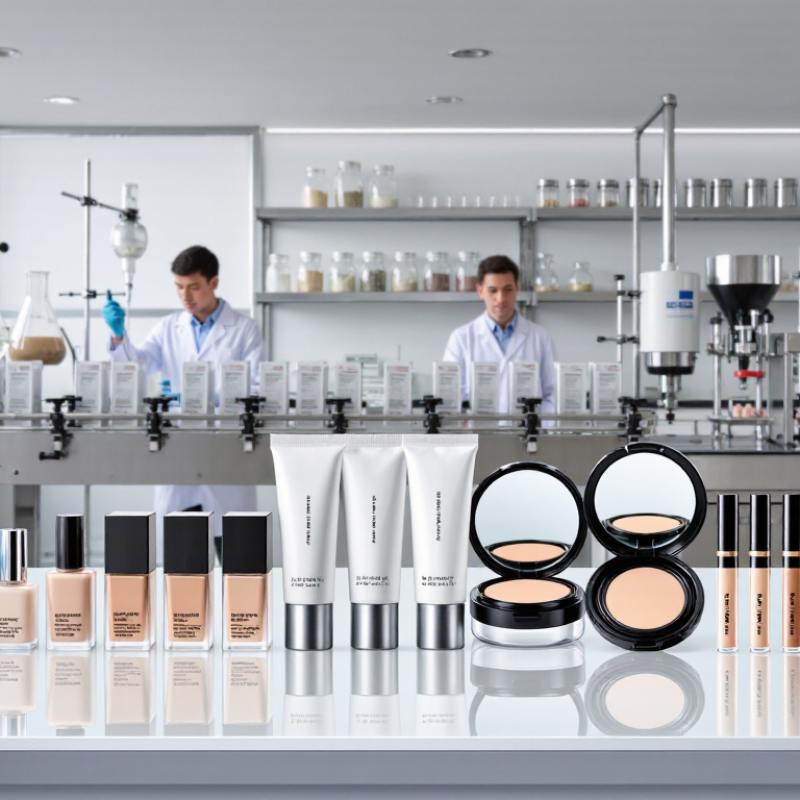
Makeup base products form the working layer beneath color cosmetics. They include primer, liquid or powder foundation, concealer, cushion formulas, setting powder, and sunblock makeup base. Each product manages a different concern: texture, coverage, oil control, tone correction, or daily UV protection.
The category has strong commercial momentum. Grand View Research valued the global cosmetics market at approximately US$343.7 billion in 2023. Meanwhile, Statista’s 2024 market data identifies China as one of the largest global cosmetics markets. These figures help explain China’s supply strength. Buyers can source formulas, pumps, compacts, pigments, cartons, and filling services within connected manufacturing regions. That shortens development cycles.
However, supply capacity does not automatically mean consistent quality. Experienced buyers should request INCI lists, microbial results, stability data, shade panels, and batch records. ISO 22716-based production controls can support better manufacturing discipline. Practical checks matter too. Test the foundation after eight hours. Check separation after heat exposure. Inspect the pump for leakage.
China’s suppliers also support flexible order planning. Many factories offer OEM and ODM development for different coverage levels and skin-feel targets. They can adjust undertones, finish, viscosity, and packaging formats. Yet small orders may increase unit costs. Shade matching can also drift between batches. I have seen attractive samples fail during scale-up. That risk deserves honest attention. A strong sourcing process uses signed specifications, pilot batches, and independent testing before commercial shipment.
| Supplier Profile | Primary Makeup Base Products | Available Textures and Formats | Typical Packaging Options | Key Manufacturing Strengths | Common Buyer Requirements | Relevant Quality and Compliance Documentation | Why China Is Competitive for This Category |
|---|---|---|---|---|---|---|---|
| Profile 01 | Liquid Foundation Tinted Moisturizer | Sheer, medium, and full coverage; matte, natural, and radiant finishes; pump and dropper formats. | Glass or plastic bottles, airless pumps, standard pumps, droppers, and travel-size containers. | Shade development, lightweight emulsions, buildable coverage, and oil-control formulations. | Custom shade matching, skin-type testing, stability testing, and private-label packaging. | Ingredient list, product specification, microbiological test, stability report, safety assessment, and applicable market registration documents. | China has large cosmetic formulation and packaging networks, allowing coordinated development of formula, component, decoration, and filling. |
| Profile 02 | Concealer Color Corrector | Liquid, cream, balm, and high-coverage textures; doe-foot, squeeze-tube, pot, and stick applications. | Wand tubes, squeeze tubes, small jars, click pens, and twist-up sticks. | High-pigment dispersion, crease-resistant formulas, targeted color correction, and precise applicators. | Coverage validation, wear testing, shade consistency, applicator compatibility, and packaging leak testing. | Formula composition, safety data, heavy-metal screening where required, stability results, and packaging compatibility records. | High-volume pigment, resin, tube, applicator, and decoration suppliers are available within established manufacturing regions. |
| Profile 03 | Makeup Primer Pore-Filling Base | Silicone gel, water gel, cream, blurring, illuminating, mattifying, and hydrating textures. | Tubes, airless bottles, pump bottles, squeeze containers, and jars. | Film-forming systems, skin-feel optimization, pore-blurring effects, and compatibility with foundation. | Slip and spreadability testing, pilling assessment, skin compatibility testing, and preservation testing. | Full ingredient declaration, safety assessment, microbial limits, stability testing, and claims-support documentation. | Flexible production lines support both mass-market and premium-feel textures with relatively efficient customization. |
| Profile 04 | BB Cream CC Cream | Light-to-medium coverage with moisturizing, tone-evening, brightening, or daily-wear positioning. | Laminated tubes, plastic tubes, airless pumps, sachets, and compact containers. | Multifunctional emulsions, natural-looking coverage, skincare-oriented ingredients, and fast shade adaptation. | Claims substantiation, SPF testing when applicable, shade stability, texture evaluation, and export labeling review. | Safety assessment, sunscreen test reports where claims are made, stability data, microbiological testing, and regulatory files. | Integrated cosmetic and packaging supply chains make multifunctional products practical for international private-label programs. |
| Profile 05 | Cushion Foundation Cushion Concealer | Liquid foundation or concealer saturated into a porous cushion; natural, semi-matte, and moisturizing finishes. | Refillable compacts, hinged cases, inner trays, puffs, mirrors, and replacement cushions. | Controlled liquid loading, compact assembly, puff development, refill design, and leakage prevention. | Evaporation control, cushion saturation consistency, compact drop testing, puff hygiene, and formula-component compatibility. | Microbiological testing, stability report, packaging compatibility, safety assessment, and product information file where required. | China has extensive experience in compact molding, cosmetic assembly, puff production, printing, and decorative finishing. |
| Profile 06 | Powder Foundation Pressed Powder | Pressed, baked, or loose powder; sheer to buildable coverage; matte, satin, and soft-focus finishes. | Compacts, refill pans, magnetic palettes, hinged cases, sifters, and loose-powder jars. | Powder pressing, oil absorption, pigment blending, pan adhesion, and controlled particle-size formulation. | Hardness testing, breakage testing, fallout evaluation, color matching, pan adhesion, and compact durability testing. | Ingredient list, microbial testing where applicable, heavy-metal screening, stability records, and packaging test reports. | Competitive access to powder raw materials, metal pans, molded cases, magnets, and automated filling and pressing equipment. |
| Profile 07 | Foundation Stick Contour Base | Solid cream, balm, and semi-matte stick formulas for foundation, contouring, highlighting, and touch-ups. | Twist-up tubes, refillable sticks, slim portable cases, and dual-ended components. | Wax and emollient balance, smooth payoff, temperature resistance, precise molding, and retractable component filling. | Heat and cold stability, twist mechanism testing, breakage resistance, glide evaluation, and shade uniformity. | Formula specification, stability report, packaging compatibility, safety assessment, and transport-condition testing. | Component tooling, plastic injection molding, filling, assembly, and surface decoration can be sourced through coordinated vendors. |
| Profile 08 | Tinted Sunscreen Base Daily Tone-Up Cream | Fluid, cream, lotion, and tone-up textures with cosmetic tint; mineral or organic UV-filter systems depend on market rules. | Tubes, pumps, airless bottles, sachets, and compact dispensers. | Emulsion processing, pigment dispersion, white-cast control, sensory optimization, and UV-filter formulation support. | UV protection testing where claimed, water-resistance testing where claimed, shade stability, and regulatory review by target market. | UV test report, safety assessment, ingredient compliance review, stability data, microbiological test, and required local notification or registration. | China combines cosmetic formulation resources with large packaging capacity, supporting multiple pack sizes and market-specific versions. |
| Profile 09 | Makeup Setting Spray Hydrating Base Mist | Fine mist, dewy, hydrating, oil-control, and long-wear formulas; alcohol-free options may be developed when required. | Fine-mist bottles, pump sprays, travel sprays, aluminum aerosol containers, and refill systems. | Fine-spray engineering, film-forming systems, preservative control, drying-time optimization, and spray-pattern consistency. | Spray output testing, nozzle compatibility, leakage testing, freeze-thaw testing, wear evaluation, and microbial challenge testing. | Ingredient declaration, safety assessment, stability report, microbiological testing, packaging compatibility, and transport documentation. | Local availability of bottles, pumps, nozzles, labels, cartons, and contract filling supports cost-efficient end-to-end production. |
| Profile 10 | Multifunctional Base Palette Travel Makeup Base Kit | Combined foundation, concealer, corrector, powder, contour, and highlight pans in one coordinated system. | Magnetic palettes, hinged kits, refillable pans, folding cases, and custom inserts. | Multi-pan filling, coordinated shade systems, compact assembly, custom inserts, and gift-set packaging. | Pan adhesion, color consistency across batches, compact drop testing, component assembly, and assortment control. | Product specifications for each formula, safety documentation, stability testing, packaging tests, and market-specific labeling. | China’s broad ecosystem for formulas, molded components, metal pans, printing, assembly, and export packaging supports complex sets. |
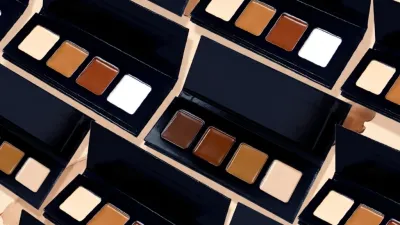
The color cosmetics market continues to evolve as consumers seek natural-looking definition, long-lasting wear, and multifunctional products. Grand View Research data highlights continued growth and changing trends in the sector, creating opportunities for suppliers and factories to develop professional makeup solutions for the Chinese market. Our natural waterproof cream contour palette is designed for OEM programs that require reliable performance, refined texture, and flexible product customization. It supports modern preferences for lightweight coverage, seamless blending, and photo-ready facial definition.
Powered by Elastic Reticulum Technology, the formula uses Dimethicone Crosspolymer to form a flexible film over the skin. During application, its “Instant Melt” phase shift transforms the creamy texture into a dense yet breathable velvet shield, helping pigments remain evenly positioned through facial movement while reducing visible migration and creasing. The palette enhances spot coverage and creates naturally defined contours without a heavy appearance, making it suitable for high-definition makeup applications, professional artists, and daily beauty routines. Its waterproof positioning and smooth, natural finish can help OEM partners expand their color cosmetics portfolios in response to demand for durable, comfortable, and versatile complexion products.
They include primer, foundation, concealer, cushion formulas, setting powder, and sun protection base products. Each one serves a different purpose.
Connected manufacturing regions can supply formulas, pumps, compacts, pigments, cartons, and filling services. This may shorten product development cycles.
Request ingredient lists, microbial results, stability data, shade panels, and batch records. Also ask for factory profiles and recent testing documents.
Test it after eight hours of wear. Expose it to heat, freezing, shaking, and repeated opening.
Define the product type, finish, coverage, shade range, net weight, packaging, and target market. Keep one physical reference sample.
Many suppliers can adjust undertones, finish, viscosity, coverage, and packaging formats. The final result still requires practical testing.
Compare at least three suppliers using the same specification sheet. Review minimum order quantities, lead times, payment terms, and testing records.
Check pumps for leakage and containers for damage after transport simulation. Inspect seals, closures, carton strength, and filling accuracy.
Use signed specifications, pilot batches, independent testing, and pre-shipment inspections. Verify certificates with the issuing laboratory.
Confirm ingredient restrictions, labeling rules, product claims, and import documents for every destination. Requirements can differ between markets.
This guide presents a practical overview of China’s Makeup Base supply industry for global buyers. It explains the main product categories, including foundations, primers, concealers, powders, cushions, and related complexion products, while examining why China has become a major sourcing hub through its manufacturing capacity, supply-chain efficiency, formulation expertise, and export experience. It also introduces a structured method for evaluating leading suppliers according to product range, production capabilities, quality systems, customization services, and international market coverage.
The article further highlights essential quality, safety, testing, packaging, and regulatory considerations that buyers should review before placing orders. It compares pricing factors, minimum order quantities, private-label options, sample procedures, production lead times, and shipping arrangements. Finally, it provides a step-by-step sourcing process, from defining product requirements and screening suppliers to requesting samples, confirming specifications, reviewing compliance documents, negotiating terms, conducting inspections, and managing delivery. This framework helps buyers make informed, efficient, and responsible purchasing decisions.