Finding the right sources for color cosmetics that can be sold globally is about more than just picking pretty shades and getting them at a good price. It's a bit of a dance — you’ve gotta do your homework, work with verified suppliers, and plan carefully for each market. According to Grand View Research, the worldwide color cosmetics market was worth around USD 70.35 billion in 2023, and they expect it to keep growing through 2030. Meanwhile, McKinsey’s 'The Beauty Market in 2023' calls the industry resilient and full of innovation, with makeup still being a key growth area. But here's the thing: consumer expectations are changing super fast, so staying ahead is crucial.
A practical sourcing approach starts with a clear product brief. Think about the shade range, textures, finishes, packaging styles, pricing targets, and minimum order quantities. Once that's down, you need to scrutinize each manufacturer — checking their GMP practices, ISO 22716 certifications, ingredient traceability, stability tests, and batch records. Those tiny details really matter. For example, a lipstick might look totally fine under warehouse lighting, but under natural daylight, it might look different — and that can lead to returns, bad reviews, and a loss of trust.
When you visit suppliers, a thorough audit of their production lines, cleaning routines, color matching processes, and corrective action records is a must. Data from Circana shows how important product performance and the overall customer experience are when it comes to buying makeup.
And don't forget — compliance is king. Different markets like the EU, US, and UK have specific rules. Make sure your team reviews all labels, safety docs, claims evidence, and packaging language carefully. Laws like the EU Cosmetics Regulation and the US Modernization of Cosmetics Regulation Act set the standards. No supplier is perfect, and forecasts can miss the mark — consumer tastes change too. That’s why transparent documentation, small pilot orders, independent testing, and realistic lead times are key to avoiding surprises. The best sourcing process is one that really ties your commercial goals to solid evidence, accountability, and reliable execution.
Global color cosmetics sourcing starts with a precise scope. Include foundation, blush, eye products, lip products, and nail color. Separate products with sun-protection or therapeutic claims, because classification may change by market. McKinsey estimates that the global beauty market could reach about $590 billion by 2028, growing around 6% annually. That growth increases supplier pressure, but speed cannot replace compliance.
ISO 22716 provides practical GMP controls for production, storage, quality testing, and documentation. Require batch records, validated cleaning, controlled raw materials, and traceable color additives. Under FDA MoCRA, U.S. suppliers and responsible persons must support facility registration, product listing, safety substantiation, and serious adverse-event reporting. FDA also expects accessible records and may use mandatory recall authority. Confirm color additive permissions for every intended use. Eye-area pigments need special attention. Our first scope draft is often too broad. That is a costly weakness.
Tips: Build a product matrix before requesting quotations. Record shade, claim, ingredient, color additive, packaging, market, and responsible party. Ask factories for ISO 22716 evidence, audit history, stability data, microbial results, and complaint procedures. Do not accept “FDA approved” as a supplier shortcut; cosmetics are generally not pre-approved, although certain color additives require authorization. Euromonitor International continues to identify premiumization and product innovation as major beauty-market drivers. Still, a beautiful shade can fail if its documentation is incomplete. Personally, I would approve a smaller launch with stronger records than a large launch with uncertain traceability.
McKinsey projects the global beauty market could reach $590 billion by 2030. Color cosmetics should not be sourced with one global assumption. Market prioritization needs evidence, not excitement. Euromonitor International identifies Asia Pacific as a major beauty growth engine, while NIQ’s State of Beauty 2024 highlights continued digital shopping and premiumization. These signals support targeted entry, but they do not guarantee demand.
Start with markets where category growth, purchasing power, and shade needs overlap. Compare foundation undertones, climate conditions, shopping channels, and local price expectations. A humid market may require stronger wear testing. A colder market may expose dryness and texture problems. McKinsey also notes that value-conscious consumers are reshaping beauty decisions, so affordable products still need credible performance. That balance is easy to underestimate.
Tips: Build a market scorecard before contacting suppliers. Include projected growth, import requirements, testing costs, minimum order quantities, and retail margins. Request stability data, ingredient documentation, shade panels, and batch-level quality records. Test samples with local users, not only internal teams. Keep the first order narrow. It reduces inventory risk, although it may limit early revenue. Recheck assumptions after twelve weeks of sales data. Forecasts can be useful, but they are not customer feedback. Sources: McKinsey & Company, The Beauty Market in 2030; NIQ, State of Beauty 2024; Euromonitor International, Beauty and Personal Care analysis.
A practical market-screening framework for selecting color-cosmetics sourcing and launch priorities.
| Market | Estimated 2024 Population | Beauty-Market Relevance | Color-Cosmetics Sourcing Signal | Recommended Priority | Planning Score | Key Compliance and Product Considerations |
|---|---|---|---|---|---|---|
| United States | Approximately 345 million | One of the world’s largest beauty-consumer markets; mature category infrastructure and high product variety. | Strong opportunity for complexion, eye, lip, long-wear and inclusive-shade products. High demand for online discovery and rapid product testing. | Tier 1 — Launch | 9.2 / 10 | Review the Modernization of Cosmetics Regulation Act requirements, product safety substantiation, facility registration obligations and U.S. labeling rules. Avoid drug claims unless the product is regulated accordingly. |
| China | Approximately 1.42 billion | Large beauty market with substantial urban demand and a broad digital-commerce ecosystem. | High potential for complexion, lip, cushion, color-adaptive and social-commerce-friendly formats. Local consumer testing is important for shade, texture and fragrance preferences. | Tier 1 — Launch | 9.0 / 10 | Comply with the Cosmetics Supervision and Administration Regulation and associated registration or filing procedures. Check ingredient restrictions, claims evidence, responsible-person duties and animal-testing exemptions where applicable. |
| India | Approximately 1.45 billion | Largest population globally and a relatively young consumer base with expanding beauty access beyond major cities. | Promising for affordable color cosmetics, transfer-resistant products, warm and deep shades, compact formats and climate-resilient formulas. | Tier 1 — Build | 8.8 / 10 | Review the Cosmetics Rules, 2020, import registration requirements, ingredient restrictions, labeling provisions and applicable quality standards. Validate performance under heat and humidity. |
| Brazil | Approximately 212 million | Large beauty-consuming population with strong cultural engagement in makeup, hair and personal appearance. | Attractive for lip, eye, complexion and high-humidity products. Shade range, sweat resistance and accessible price architecture are important. | Tier 1 — Build | 8.4 / 10 | Confirm product classification, notification or registration pathway, Portuguese labeling, ingredient compliance and local regulatory representation requirements. |
| Indonesia | Approximately 283 million | Large, young and mobile-first consumer market with increasing beauty-product adoption. | Good fit for lightweight, humidity-resistant, multifunctional and modest-price products, including lip and eye categories. | Tier 1 — Test | 8.1 / 10 | Products generally require notification through the national authority before distribution. Check ingredient rules, Indonesian labeling, halal-related requirements and local responsible-person obligations. |
| Japan | Approximately 124 million | High-income, quality-sensitive market with sophisticated beauty retail and strong expectations for product performance. | Suitable for precision makeup, refined textures, natural-finish complexion products, subtle color palettes and compact packaging. | Tier 2 — Selective | 7.8 / 10 | Determine whether products fall under Japan’s cosmetics or quasi-drug framework. Verify Japanese labeling, ingredient standards, product claims and importer or responsible-person requirements. |
| South Korea | Approximately 52 million | Highly trend-sensitive market with advanced product-development expectations and fast consumer feedback cycles. | Strong test market for cushion formats, hybrid makeup-skincare products, lightweight textures, innovative applicators and rapid trend concepts. | Tier 2 — Test | 7.7 / 10 | Review the Cosmetics Act, functional-cosmetics classification where relevant, Korean labeling, ingredient restrictions and claim substantiation requirements. |
| European Union | Approximately 449 million | Large integrated regional market with consistent rules across member states and strong demand for safety and sustainability transparency. | Attractive for clean-positioned, refillable, inclusive and premium color cosmetics. Products must be designed for multilingual packaging and region-wide compliance. | Tier 1 — Regional | 8.7 / 10 | Comply with Regulation (EC) No. 1223/2009, including an EU responsible person, safety assessment, product information file, CPNP notification, INCI labeling and substantiated claims. |
| United Kingdom | Approximately 69 million | Well-developed beauty retail and online market with strong influence on European and international product positioning. | Good fit for premium, ethical, vegan-positioned and digitally marketed products, provided claims and packaging are carefully controlled. | Tier 2 — Selective | 7.6 / 10 | Follow the U.K. Cosmetics Regulation, appoint a U.K. responsible person where required, complete the relevant product notification and use compliant English labeling. |
| United Arab Emirates | Approximately 11 million | Smaller population but high purchasing power, international consumer mix and regional distribution potential. | Useful gateway for premium and prestige color cosmetics targeting the Gulf region. Heat stability, high-coverage formulas and broad shade availability matter. | Tier 2 — Gateway | 7.3 / 10 | Check federal and emirate-level registration, conformity, product documentation, Arabic and English labeling, import requirements and applicable halal or ingredient expectations. |
| Australia | Approximately 27 million | Smaller but affluent market with strong digital shopping behavior and high attention to ingredient transparency. | Suitable for clean-label, sensitive-skin-conscious, cruelty-free and climate-resistant makeup, especially online-first launches. | Tier 3 — Test | 6.9 / 10 | Check the Australian Industrial Chemicals Introduction Scheme, ingredient restrictions, therapeutic-claim boundaries, product labeling and importer responsibilities. |
Shade planning should begin with evidence, not a supplier’s favorite palette. Euromonitor International’s Voice of the Consumer: Beauty 2024 covers beauty preferences across more than 20 countries. Its findings show that consumers increasingly expect products to reflect personal identity, skin tone, and local routines. Treat this as directional evidence, not a perfect forecast. Survey answers can differ from checkout behavior.
McKinsey estimates that the global beauty market could reach about 590 billion US dollars by 2028. Color cosmetics remain a visible part of that expansion, but demand is uneven. Compare search data, retailer sell-through, climate, and undertone preferences by market. A warm beige may perform well in one city and remain untouched in another. Small pilot orders are safer than oversized launches.
A practical sourcing brief should list shade families, finish, format, and replenishment speed. For example, “tz 6 layer eyeshadow 134 color lipgloss blush” may describe a broad online search, but it does not prove demand for every shade. Ask suppliers for standardized swatches under daylight and indoor lighting. Check oxidation after several hours. Request ingredient, stability, and safety documentation before approval. I would also reserve budget for reformulation. Early assumptions are often wrong. In my experience, a compact assortment with clear shade logic can outperform a large, confusing range. Review results monthly, then adjust purchasing against real regional sales data.
Sources: Euromonitor International, Voice of the Consumer: Beauty 2024; McKinsey & Company, The Beauty Market in 2023: A Special State of Fashion Report.
Sourcing color cosmetics for global markets starts with evidence, not attractive samples. A supplier should demonstrate ISO 22716-aligned practices and current GMP controls. Ask for controlled batch records, cleaning logs, training files, and documented deviation handling. During a factory visit, inspect raw material storage, weighing rooms, filling lines, and hygiene zoning. Details matter.
For a Color Correcting Primer, evaluate pigment dispersion, shade consistency, texture, and stability across temperature changes. Request samples from multiple production batches, not one carefully selected unit. Review the supplier’s internal audit schedule and recent corrective actions. A strong audit report should show findings, root causes, owners, deadlines, and closure evidence. Vague answers deserve attention.
Capacity also requires practical testing. Confirm monthly output, available filling lines, minimum order quantities, packaging compatibility, and realistic lead times. Check whether the factory can scale without changing critical equipment or unapproved subcontractors. I have found that polished documents can hide weak shop-floor habits. That remains a useful warning. Conduct a live production review when possible. Observe line clearance, label control, in-process checks, and retain-sample storage. Review stability data for the intended formula and packaging combination. A supplier may pass an audit yet struggle with seasonal demand. Discuss backup equipment, staffing depth, and raw material continuity before approving the relationship. Keep every commitment documented. Photos, signed records, and follow-up dates make supplier decisions more reliable.
How to Source Color Cosmetics for Global Markets?
Global color cosmetics demand rewards speed, but compliance cannot be treated as a final checklist. McKinsey’s The State of Fashion: Beauty 2023 projects the beauty market may exceed $580 billion by 2027. Circana also reported that U.S. prestige makeup sales grew 15% in 2023. These figures suggest opportunity, not permission to launch quickly.
For the EU, Regulation 1223/2009 requires a Responsible Person, a Product Information File, and a Cosmetic Product Safety Report. Products must also be notified through CPNP before sale. Confirm restricted colorants, preservatives, allergens, claims, and ISO 22716 manufacturing controls. A Color Changing Lip Gloss needs careful shade testing. Its formula, packaging contact, and color effect may change its safety evidence. In the U.S., MoCRA requires facility registration, product listing, safety substantiation, and serious adverse event reporting within 15 business days. Keep batch records and complaint procedures accessible. Do not rely only on supplier declarations. They can be incomplete.
Tips: Request full INCI data, allergen statements, stability results, microbiological testing, and packaging compatibility samples. Match every shade to its approved color additive status. Check the EU and U.S. separately. One file rarely satisfies both markets. A small gap can delay customs clearance or force relabeling. Review claims with a regulatory specialist before artwork approval. Even experienced teams miss details when formulas change late. That is where sourcing plans become fragile.
Sourcing color cosmetics for global markets requires more than comparing factory prices. A lower unit quote can become expensive after freight, import duties, customs fees, and local handling charges. Build a landed-cost sheet for each destination. Include product price, packaging, insurance, ocean or air freight, tariffs, taxes, inspection fees, and inland delivery.
Freight is rarely stable. Request quotes for the same shipment weight, carton count, route, and delivery term. Compare air freight for urgent launches with ocean freight for replenishment orders. Then test different MOQs. A larger order may reduce unit cost, but it can tie up cash and create excess inventory. Color shades also add complexity. Slow-moving shades may remain in storage while popular shades sell out.
Lead time deserves equal attention. Add production time, artwork approval, testing, transit, customs clearance, and safety stock. A supplier promising 30 days may require 60 days in practice. My first sourcing spreadsheet was too optimistic. That assumption failed. Use historical delivery data when available, and record delays by cause. Tariff classifications should be reviewed carefully with a qualified customs professional, since rates can vary by formula, packaging, origin, and destination. Small errors compound. Run best-case, expected, and delayed scenarios before approving a purchase order. A reliable decision is not always the cheapest quote; it is the option that protects margin, availability, and regulatory readiness.
How to Source Color Cosmetics for Global Markets?
Pilot Products and Track Performance with Circana Sell-Through Metrics
Global color cosmetics sourcing should begin with a controlled pilot, not a large purchase order. Select a small range, such as Lip Gloss Cosmetics, in practical shades and package sizes. Test them across different climates, retail formats, and price points. Record production costs, delivery times, packaging damage, and customer feedback. These details reveal sourcing risks before expansion.
Circana sell-through metrics can show how quickly pilot units move after reaching stores. Compare units sold with units delivered during each reporting period. Review weekly performance by market, channel, shade, and product type. A gloss may sell strongly online but remain slow in physical stores. That difference matters. Check the reporting coverage, update schedule, and product classification before making decisions.
Use the results to adjust forecasts and supplier orders. A product with high sell-through may still need better inventory planning. A weak result may reflect poor placement, unsuitable shades, or limited promotion. Do not treat one strong week as proof of long-term demand. We learned this the hard way. A compact dashboard should include sell-through rate, weeks of supply, returns, stockouts, and realized margin. Local teams should validate unusual results with store visits and customer comments. Data guides the decision, but it does not replace market experience.
Pilot products should be evaluated market by market using sell-through rate, defined as units sold divided by units received. The benchmark below uses Circana’s reported 2024 U.S. prestige beauty category growth versus 2023 to show where color cosmetics fit within the wider beauty market.
Source: Circana, 2024 U.S. prestige beauty market reporting. Company and brand data are excluded.
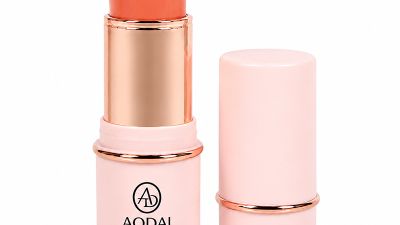
A custom multi-use color blush stick from China offers a practical way to simplify everyday beauty routines. Designed for cheeks, lips, and eyes, this portable makeup essential combines several steps in one compact format, making it easy to refresh your look at home, at work, or while traveling. Its multi-dimensional color blend technology creates a naturally layered effect, allowing soft blush tones, subtle lip color, or a warm wash across the eyelids without requiring multiple products.
The creamy, lightweight texture glides smoothly over the skin and melts into the complexion for a silky, second-skin finish. It can be applied directly from the stick or blended with fingertips, a brush, or a sponge to create sheer color or buildable intensity. The formula is designed to blend with base makeup, helping minimize harsh edges, excess residue, and an overly heavy appearance. Produced in China with careful attention to manufacturing quality, this versatile color stick can be customized for different shades, finishes, and beauty preferences, offering a convenient solution for modern, on-the-go makeup users.
: Compare category growth, purchasing power, shade needs, climate, and shopping channels. Do not rely on excitement alone. A strong forecast does not guarantee demand.
Foundation undertones can vary widely between markets. Test shade panels with local users before placing large orders. Internal opinions may miss real matching problems.
Humid markets may require stronger wear testing. Cold climates can reveal dryness, flaking, or uneven texture. Climate assumptions are easy to underestimate.
Include projected growth, import requirements, testing costs, minimum order quantities, and retail margins. Add local price expectations and channel information. Keep the scorecard practical.
Include product price, packaging, insurance, freight, tariffs, taxes, inspections, and inland delivery. A low factory quote may become expensive after delivery. Small costs compound.
Air freight may suit urgent launches or small replenishment orders. Ocean freight can reduce costs for planned, heavier shipments. Compare identical weights, carton counts, routes, and delivery terms.
Larger orders may reduce unit costs but tie up cash. Slow-moving shades can remain in storage while popular shades disappear. That imbalance hurts availability.
Add production, artwork approval, testing, transit, customs clearance, and safety stock. A promised thirty-day schedule may take sixty days. My spreadsheet was too optimistic. Record delays by cause and review historical delivery data.
Request stability data, ingredient documents, shade panels, and batch-level quality records. Test samples with local users. Keep the first order narrow to limit inventory risk. This may reduce early revenue.
Sourcing Color Cosmetics for global markets requires a structured process that combines regulatory diligence, consumer insight, supplier evaluation, and commercial planning. Companies should first define the product scope under ISO 22716 and FDA MoCRA requirements, then prioritize target markets using projected beauty-market growth, including the anticipated global value of $590 billion by 2030. Consumer data can help identify regional preferences for shades, finishes, formats, and price points, reducing the risk of launching products that lack local demand.
Supplier screening should cover ISO 22716 or equivalent GMP systems, audit history, production capacity, quality controls, and scalability. Before commercialization, products must be reviewed against EU Regulation 1223/2009 and U.S. MoCRA obligations, including safety, documentation, and facility requirements. Landed-cost comparisons should account for freight, tariffs, minimum order quantities, and lead times. Finally, controlled pilot launches and sell-through tracking can reveal product performance, support inventory decisions, and guide future assortment adjustments across different markets.